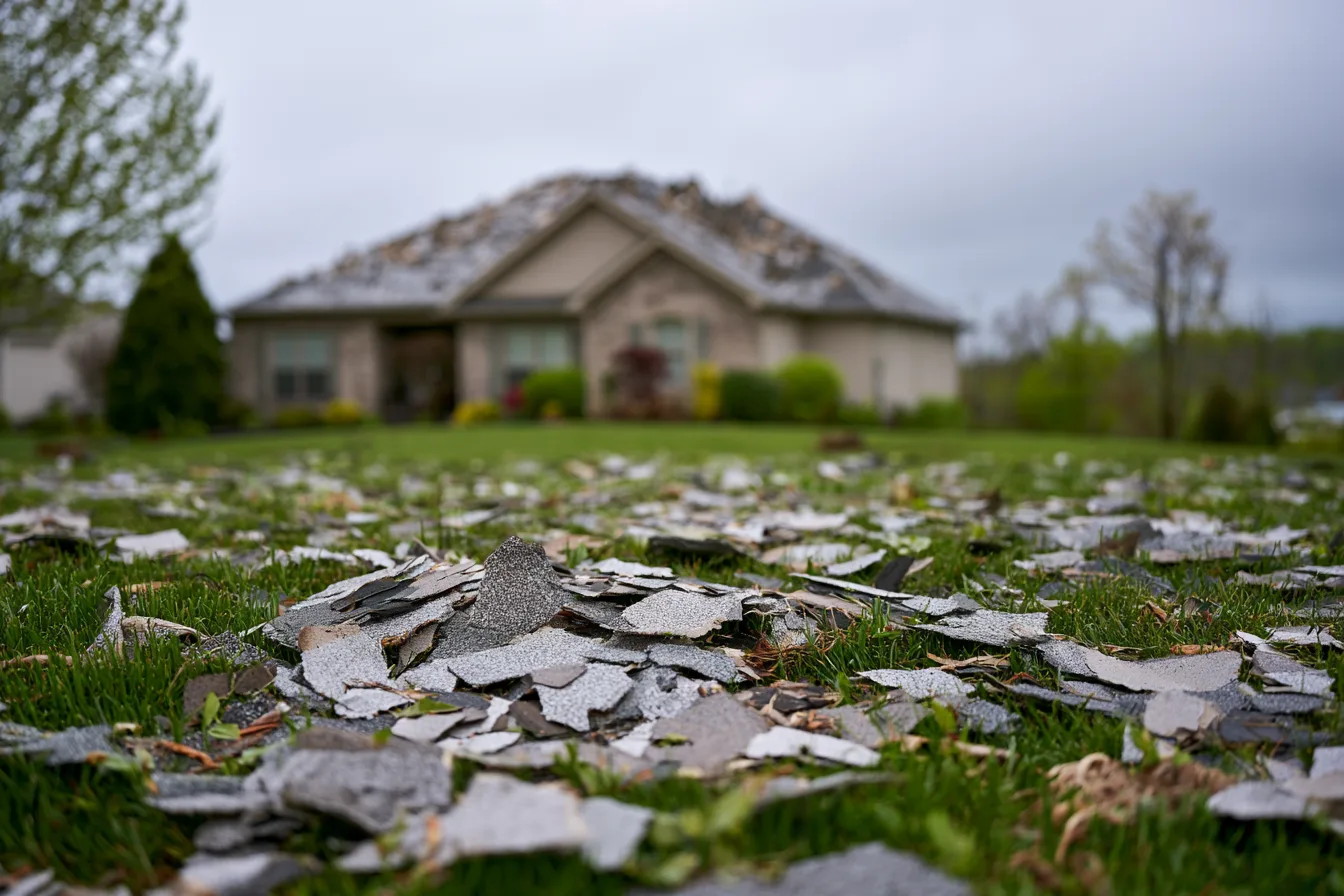
Storm and hail damage roofing in Fort Smith
After wind or hail, the useful question is what happened to your roof. Get help with visible damage, a new leak or a concern that is harder to see from the yard.
A closer look before a big decision.Free inspection. No project commitment.
Storm damage roof inspections in Fort Smith
Storm damage has to be assessed on the roof itself, including the material around the obvious opening.
Missing shingles are an obvious reason to have the roof checked. Creased shingles, a new ceiling stain or damage around a vent can be less clear from the ground. A free roof inspection starts with the affected material and follows the adjoining details to see how far the problem extends.
The condition of the roof before the storm matters. A roofer needs to separate fresh openings and impact damage from weathering, old patches and unrelated leaks. A nearby storm report cannot make that distinction for your property.
Fort Smith issued a roof-repair permit reminder after hail damage on May 11, 2026. That local notice is useful for planning the work, but it does not establish what happened to an individual roof. See the city guidance in our Fort Smith roofing permit guide.

Wind, hail and debris damage
The repair needs to match how the roof was damaged. Different materials and different parts of the same roof can need different work.
Wind lifts and bends
Wind can break a shingle seal, repeatedly bend the shingle and leave a crease near the nail line. Replacing a visibly missing tab alone can leave adjacent damaged material in place. The surrounding courses and roof edge belong in the inspection.
Hail strikes the surface
Hail can dislodge granules or damage the asphalt and reinforcement beneath them. A mark on soft metal is useful context, but the roofing material itself needs assessment. Scattered repairable damage and damage across several slopes lead to different scopes.
Debris changes the scope
A limb can damage both the covering and the wood below it. The repair may need to open a larger area to reach sound decking and reconnect the surrounding roof. Structural, electrical or interior damage needs its own appropriate trade.
After storm damage: safety and temporary protection
| Immediate concern | Useful next step |
|---|---|
| Protect people first | Keep clear of downed lines, unstable branches and a sagging ceiling. Stay off a wet or damaged roof. |
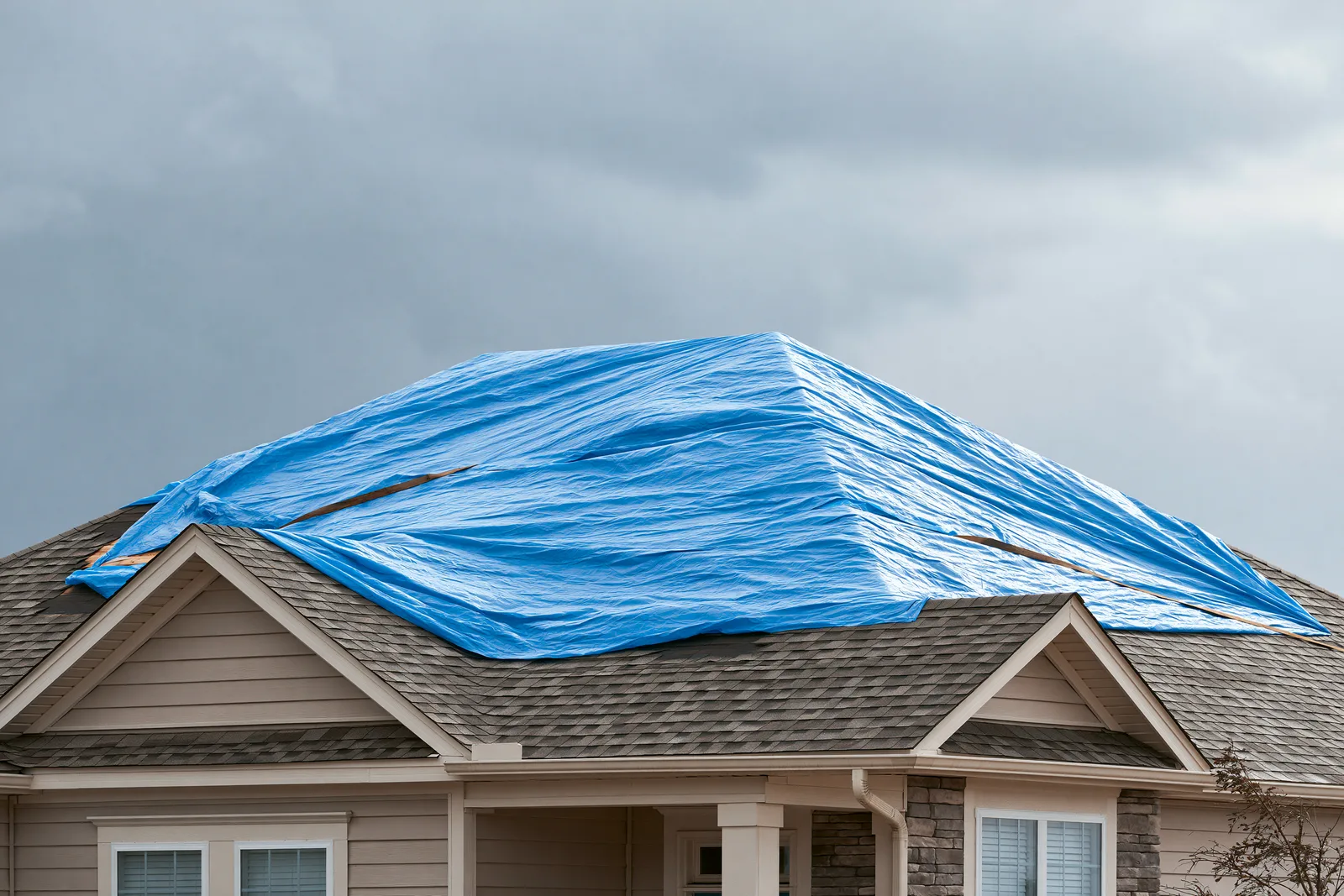
| Limit further water entry | Temporary protection can help while permanent work is organized. Roof tarping and other elevated work need appropriate access and safety equipment. |
| Preserve the loss information | Photos taken safely and receipts for necessary temporary measures can help the claim discussion. The insurer can explain what it needs and when. |
Storm damage roof repairs for Fort Smith properties
Temporary covering buys time to organize the work; it does not establish the finished repair area. A few wind-damaged shingles can be replaced when the surrounding courses remain sound enough to lift, fasten and reseal. The repair also checks the underlayment and any flashing exposed by the damage, so new shingles reconnect to a complete water-shedding surface.
A puncture or wet patch of decking changes that sequence. Roofing has to come off far enough to expose the affected wood and reach sound support. Damaged decking is replaced before the underlayment, flashing and covering are rebuilt. If the opening reaches a wall or valley, adjacent roofing may need to be lifted to restore the overlaps. That additional removal and connection work affects the cost even when the visible hole is small.
Damage spread across a slope, or surrounding shingles too brittle to rework, may call for replacing a roof section or a larger roof area. The scope should identify where new work ends, how it joins retained roofing and how the opened area will be protected during the job. Tree removal, structural repairs and wet interior finishes need coordination with the appropriate trades; they are separate from replacing the roof covering.
Roof damage and insurance coverage
The roofing scope explains the work. The insurance policy determines how a covered loss is paid.
The roof inspection and the insurance claim have different jobs. The roofer evaluates the physical damage and repair options. Your insurer applies the policy, deductible and exclusions to the reported loss. A roof can need work even when that work is not covered.
Before permanent repairs, contact the insurer about its claim requirements. Our Arkansas roof claims guide explains the payment terms and an illustrative claim calculation.
Fort Smith Storm and Hail Damage FAQs
Should I request a roof inspection after a Fort Smith storm?
Yes if you noticed a change or have reason to be concerned. A nearby storm report cannot establish damage at your address; the inspection looks at the actual roof.
Does hail damage always require replacement?
No. The distribution and severity of damage, roof material and ability to make a sound repair affect the scope.
How do the deductible and depreciation work?
The deductible is the part of a covered claim you pay. Depreciation reflects age and wear; whether it can be recovered depends on your coverage and claim requirements. See the worked example in the roof insurance guide.
Can one damaged roof slope be repaired without replacing everything?
Sometimes. The damaged area, condition of the surrounding material and ability to make sound connections determine whether a limited scope works. A repair that ends in brittle or damaged shingles may need to extend farther. Learn how those boundaries affect roof repair.
Schedule your Fort Smith storm damage inspection
Tell us when you noticed the damage and whether water is getting inside. A free inspection helps turn the storm concern into a roofing scope.