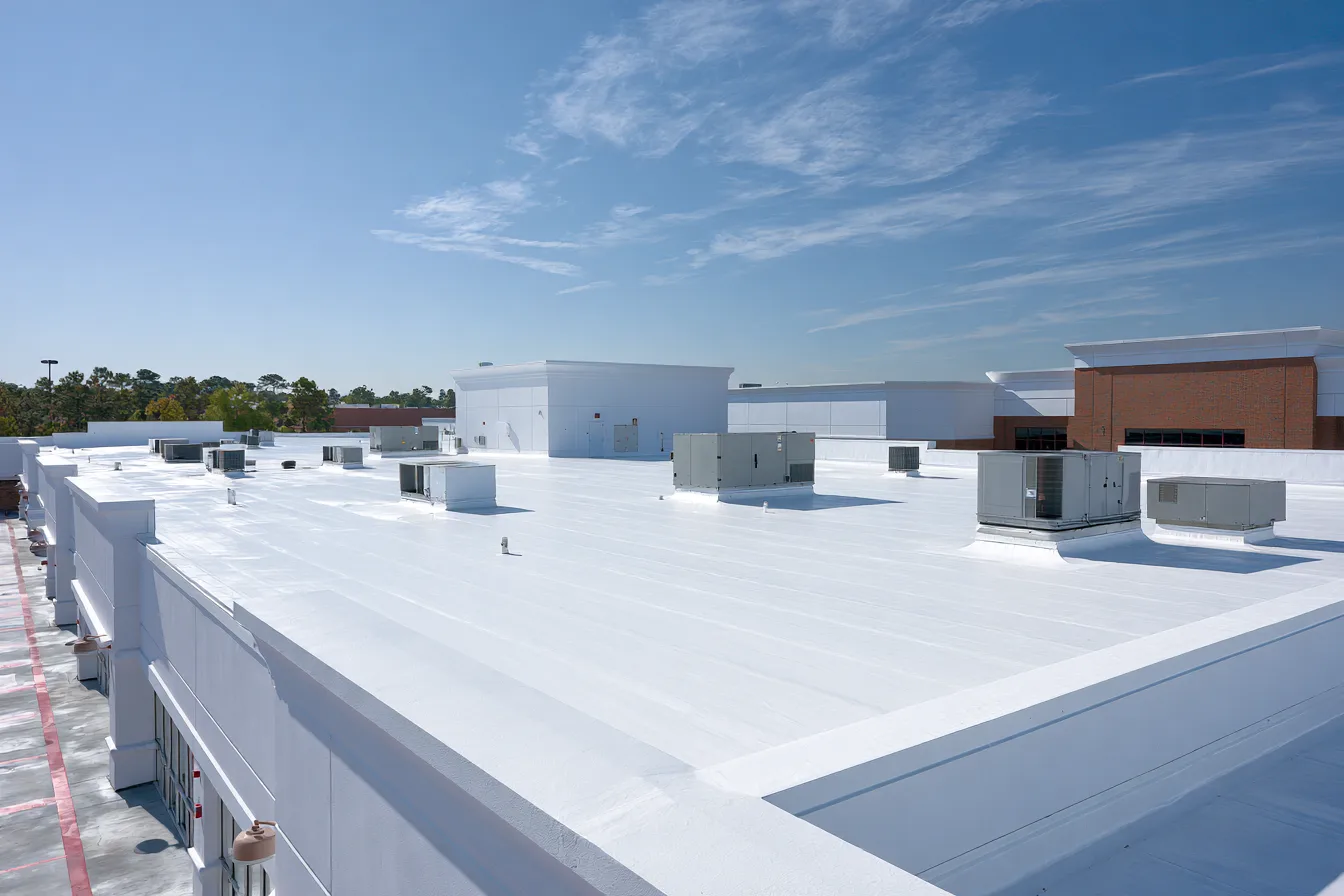
Commercial TPO roofing in Fort Smith
TPO roofing for Fort Smith commercial buildings, with repair and replacement decisions grounded in the membrane, seams, insulation and attachment beneath it.
A closer look before a big decision.Free inspection. No project commitment.
TPO roof repair and replacement in Fort Smith
TPO is a thermoplastic single-ply roofing membrane. Sheets are joined by heat-welded seams, with matching details around curbs, pipes and roof edges. The membrane is the visible layer; the attachment, insulation and support beneath it are part of the roof system.
At a leaking seam, dirt and weathering affect whether the old membrane can be cleaned and welded to a compatible repair. Around equipment, corners and raised curbs need their own flashing details. An inspection follows those connections and looks for evidence that water has traveled below the surface.
For a Fort Smith building with repeated leaks, the next step is to establish which layers remain useful. A small opening over dry, serviceable material is a different project from the same opening over wet insulation. That finding sets the scope before a new membrane is ordered.
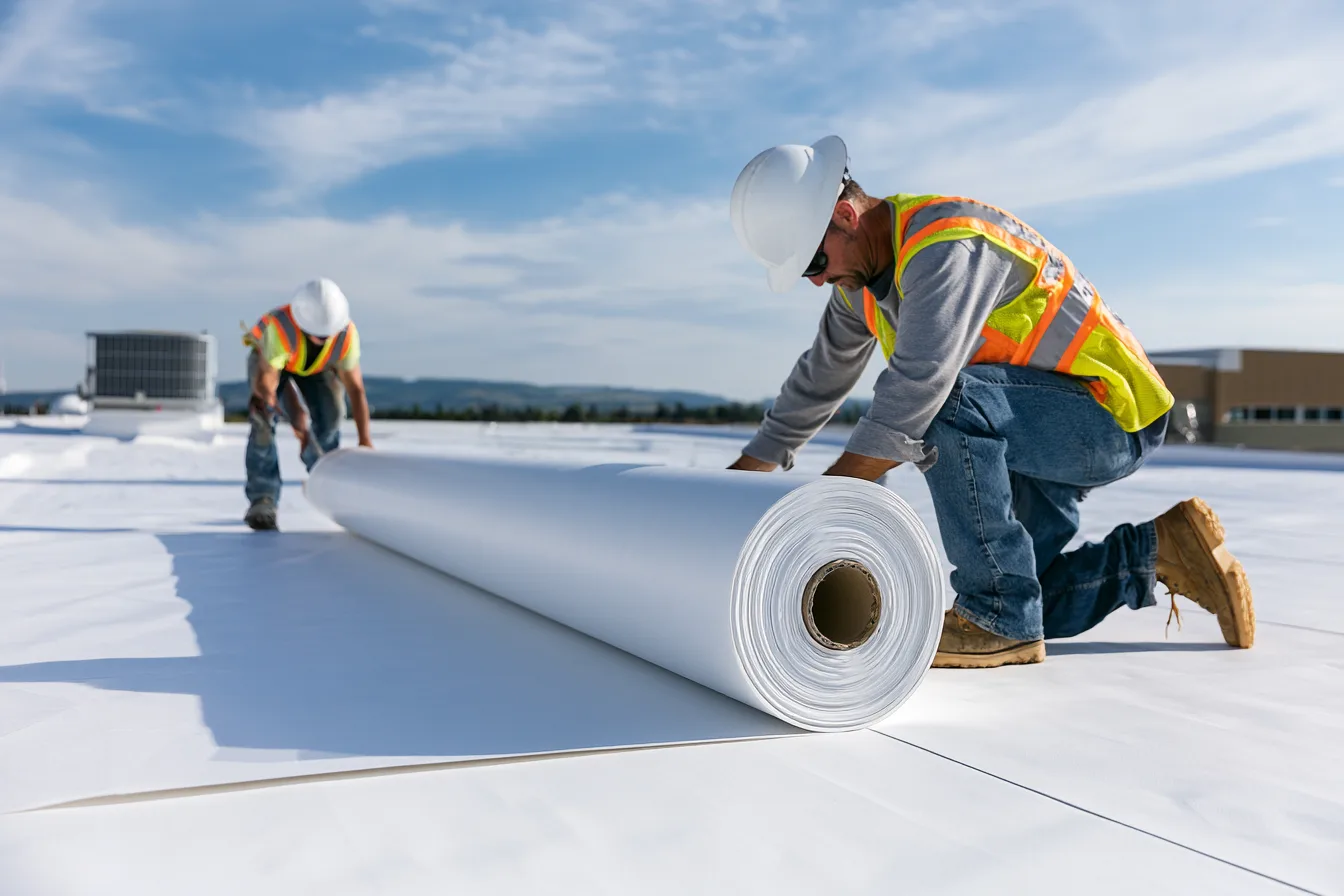
TPO repair, recover and replacement options in Fort Smith
A local membrane or flashing repair retains most of the roof. It can close an isolated opening when the surrounding material can accept the repair and the assembly beneath it remains serviceable.
Where a new membrane is needed, the removal decision establishes access to the deck, disposal, insulation work and the height of the new roof at curbs and edges. Those differences account for much of the work behind two apparently similar TPO prices.
Recover an eligible assembly
A recover installs a new system above suitable retained layers. Investigation must establish their moisture condition, attachment and allowable loading. It can reduce removal and disposal, but still needs a prepared receiving layer and rebuilt terminations at the new roof height.
Open and rebuild affected layers
Wet insulation or deteriorated decking has to be dealt with before it is covered. Removal also creates access to correct support and drainage. The roof can then be rebuilt with the specified insulation and cover board, including a sound connection to adjoining roof areas.
How the new TPO membrane is secured
Attachment holds the roofing against wind forces. Mechanically attached and adhered systems do that through different connections, so the condition and preparation below the sheet change the work.
| Attachment choice | What it requires and changes |
|---|---|
| Mechanically attached | Plates and fasteners hold the membrane through the supporting layers into the roof deck. The deck must provide the required holding strength, and the approved layout sets fastener type, length and spacing. Weak deck areas need correction; thicker retained layers can require different fasteners. The work and price follow that fastening pattern, including perimeter zones. |
| Adhered | The membrane is bonded to an approved receiving surface, often a cover board or insulation facing. That surface must be sound, clean, dry and compatible with the adhesive; the boards beneath it still need their own secure attachment. Surface preparation and adhesive application add labor, while temperature and drying requirements affect when work can proceed. Adhesive does not make weak support sound. |
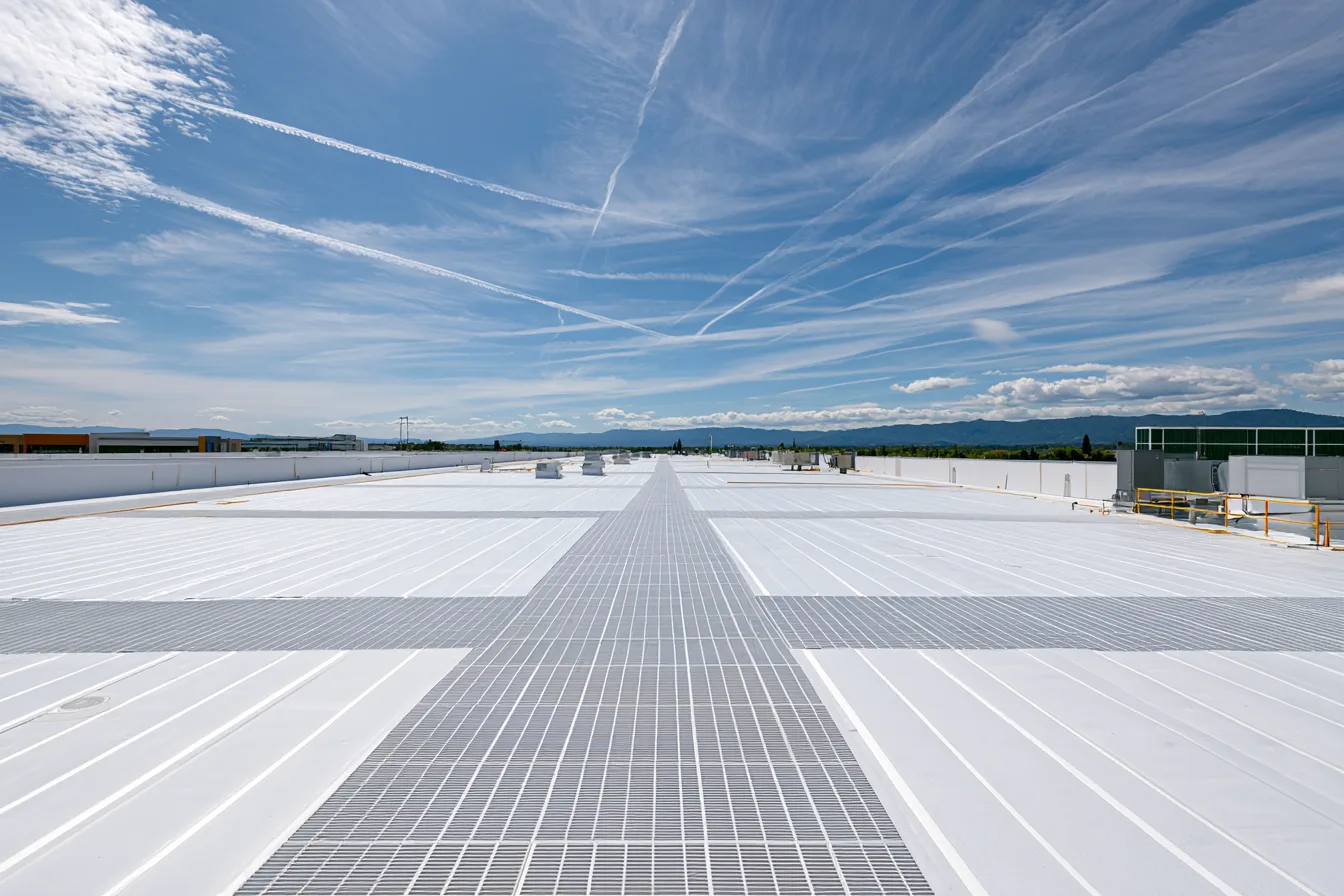
What TPO installation includes for Fort Smith buildings
Once the retained and removed areas are established, installation has to keep each layer connected to the next. Field seams are heat-welded in both attachment approaches.
Build the support and drainage layers
Repair exposed deck defects, then install the specified insulation and any cover board. Tapered insulation or other planned drainage corrections change the path toward outlets. Raising the roof surface also affects the available height at equipment curbs and wall flashings.
Attach the sheet and weld its seams
Lay out and secure the membrane using the selected attachment system. Clean, dry seam surfaces allow the hot-air weld to fuse the sheet edges. The completed seams are checked, including hand-worked corners and interruptions where a field welder cannot run continuously.
Finish curbs, outlets and roof edges
Connect the membrane to equipment flashings, drains or scuppers and perimeter metal. A thicker sheet cannot compensate for an unfinished termination. Coordinate equipment work before closing these details so later alterations do not cut through the new water barrier.
Close each work area and protect service paths
Organize removal and installation in areas that can be made watertight at the end of the day, including temporary seals where work stops. Protect completed roofing while other work continues, and plan designated paths to equipment to reduce concentrated wear during maintenance.
Fort Smith TPO Roofing FAQs
Can an older TPO roof be patched?
A compatible patch can be appropriate when the existing membrane can be properly cleaned and prepared and the surrounding assembly is sound. The product and condition govern the method.
Does white TPO guarantee lower utility bills?
A reflective surface changes solar heat absorption. Actual energy use also depends on insulation, building use, climate and mechanical systems, so a fixed savings promise would not be sound.
Is TPO the right material for every flat roof?
No. Existing conditions, attachment, use and drainage need evaluation. The flat roof guide explains the broader assembly decision.
What affects a TPO roof replacement budget?
The existing layers, insulation and deck condition, attachment method, membrane choice, equipment details and access all change the scope. Drainage modifications or removal of wet material can be significant work beyond laying new membrane.
Have your Fort Smith TPO roof inspected
Tell us about recurring leaks, open seams or a planned replacement. Include the building address and an access contact for the free inspection.