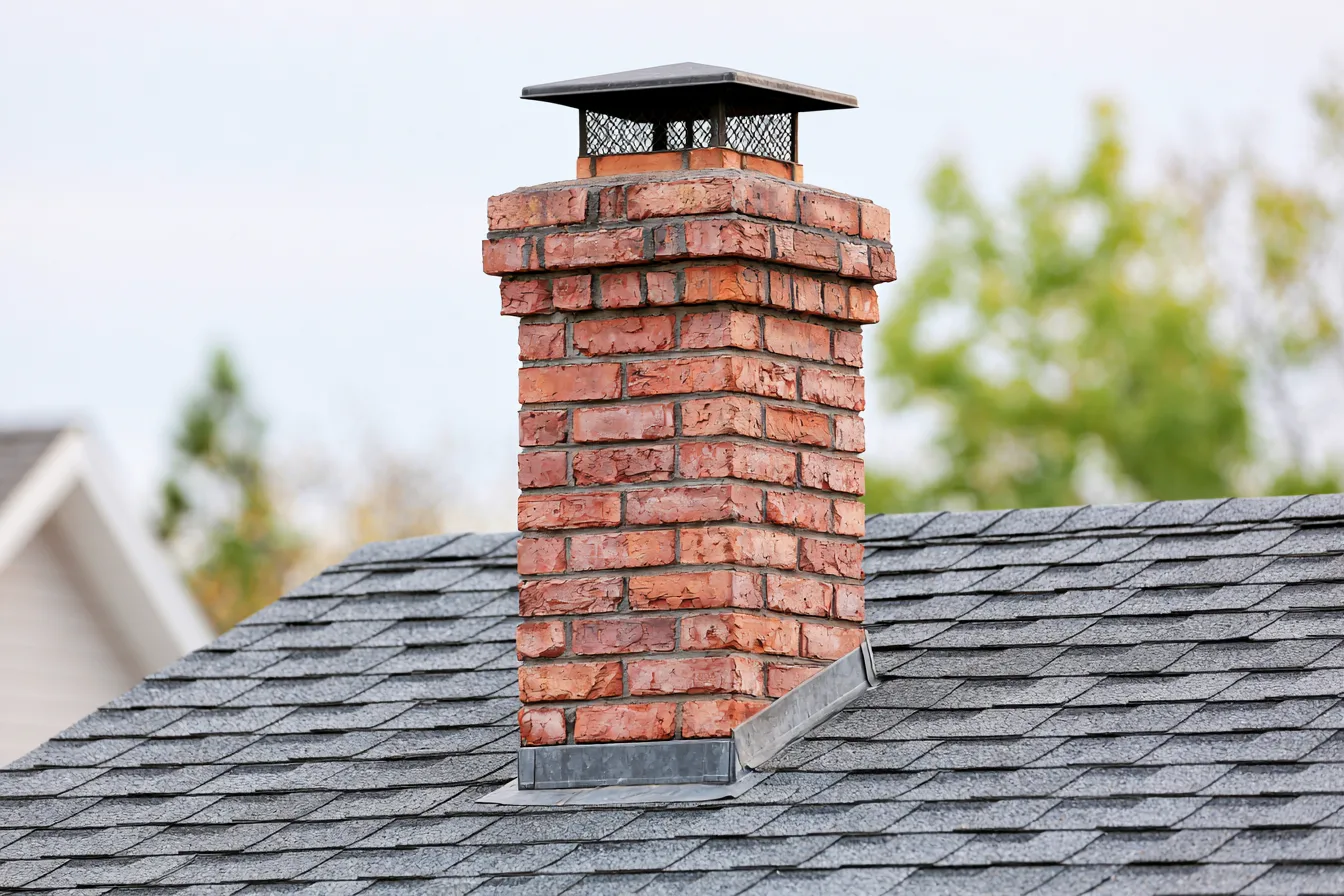
Chimney flashing repair in Fort Smith
Water near a chimney can come from the roof junction or the chimney itself. Start with the source before choosing flashing repair, masonry work or both.
A closer look before a big decision.Free inspection. No project commitment.
Chimney flashing leak repair in Fort Smith
A chimney interrupts the roof on four sides. Shingles and flashing need to carry runoff around that interruption, while the upper flashing keeps water from entering behind the roof connection. A bead of sealant across the visible joint cannot replace the overlaps underneath.
A stain near the chimney can also start higher up in the masonry or another part of the roof. The inspection needs to follow the entry path rather than assuming the nearest visible crack is the whole problem.
For a flashing repair, the surrounding roofing must be workable enough to open and rebuild the connection. The condition of both the shingles and the chimney affects how far that repair needs to extend.
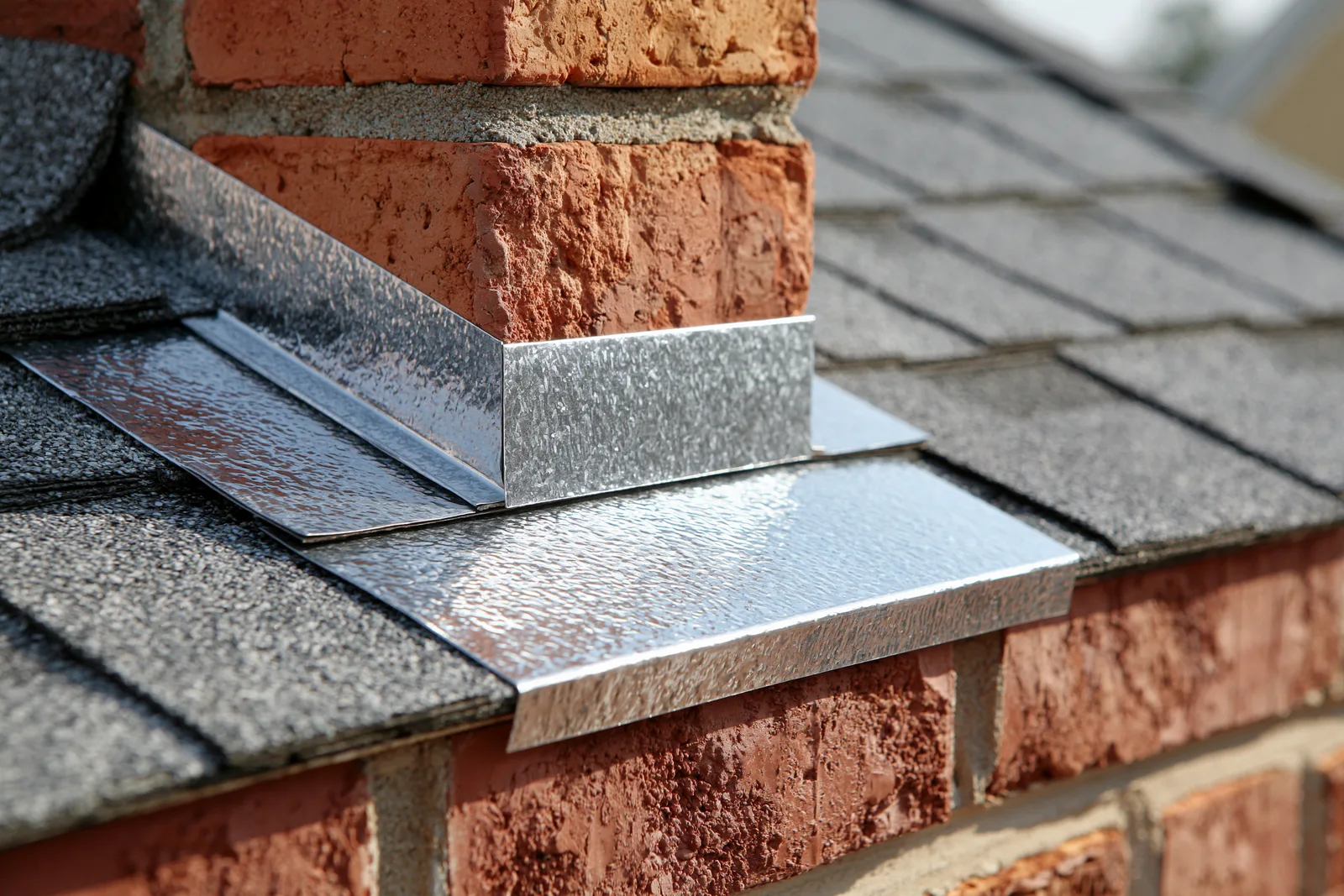
Step flashing, counterflashing and the upslope side
Step flashing
Individual pieces overlap with the shingle courses along the sides. They direct water from the wall back onto the roof surface.
Counterflashing
The upper layer protects the top of the roof flashing where it meets the masonry. Its connection to the brick or mortar needs to remain sound.
The uphill side
Water and debris collect behind a chimney that interrupts the slope. A suitable diverter or cricket, where needed, helps move runoff around it.
Roof flashing leaks and masonry problems
| Possible source | Appropriate scope |
|---|---|
| Roof-junction trouble | Displaced metal, open laps or poorly integrated shingles point to roofing detail work. |
| Water from above | A cracked crown, failed cap or deteriorated masonry can admit water independently of the roof flashing. |
| Different trade needs | Chimney lining, combustion and structural masonry concerns need the appropriate chimney or masonry professional, not a roofing patch. |
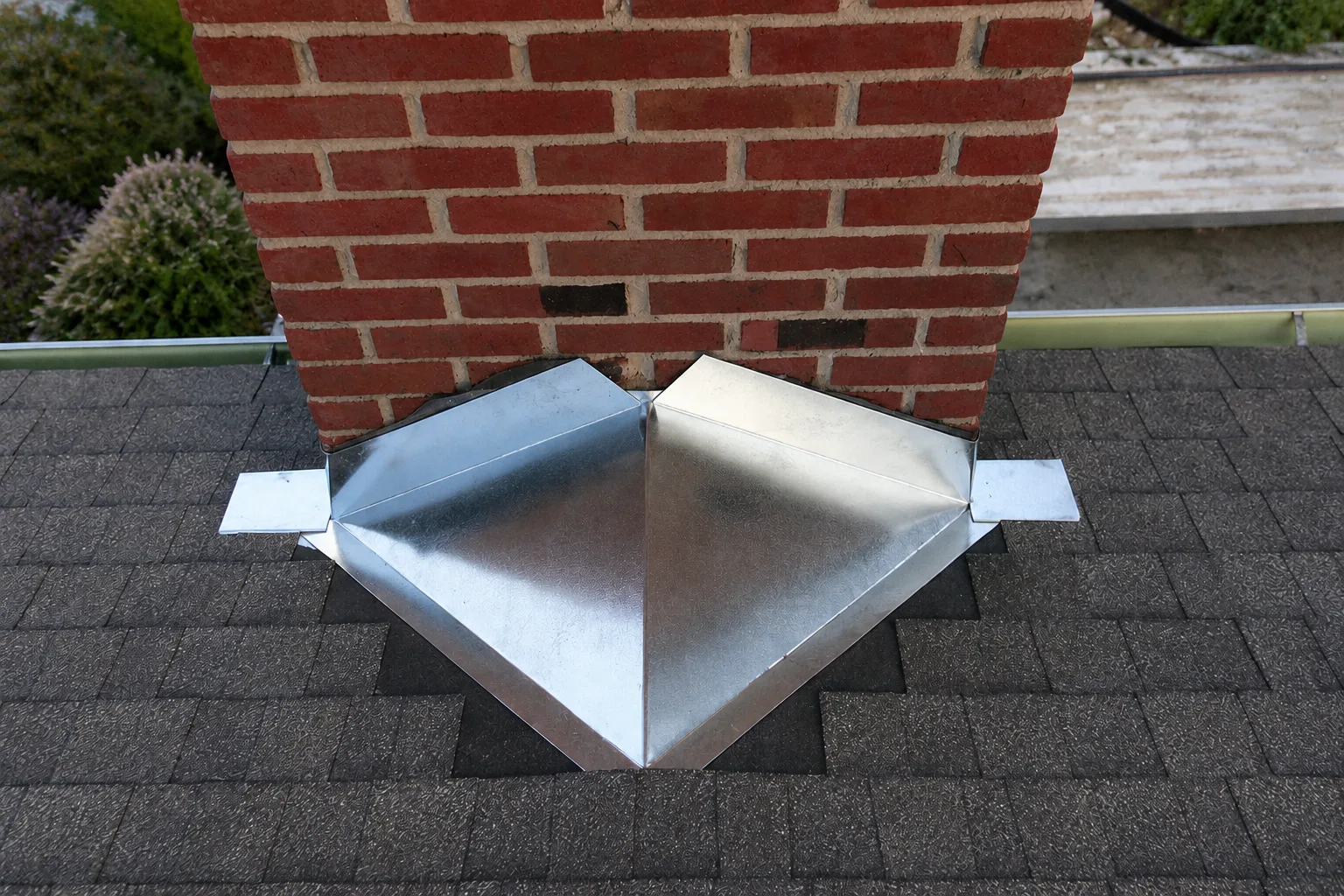
Rebuilding chimney flashing on Fort Smith roofs
A durable repair reconnects the roofing and masonry detail in the order that sheds water.
Expose the failed connection
Nearby roofing is opened enough to inspect the flashing and supporting surface. Old patches can hide corrosion, an incomplete overlap or a detail that directs water behind the roof.
Rebuild the water-shedding layers
Roof flashing must integrate with the shingle courses; counterflashing protects its upper edge at the chimney. The upslope side also needs a clear drainage path, with a diverter or cricket where the design calls for one.
Reconnect to sound roofing
The surrounding shingles and underlayment are restored to the repaired detail. Deteriorated masonry, the chimney crown or fireplace components may need separate specialist work rather than being concealed by a roofing patch.
Fort Smith Chimney Flashing FAQs
Why does the chimney leak only with wind-driven rain?
Wind can push rain into a joint that sheds ordinary rain. The cause could be roof flashing or a higher masonry detail; the rain pattern helps orient the inspection without proving the source.
Can chimney flashing be repaired without a new roof?
Yes, when the surrounding shingles and structure can support the repair. The inspection establishes how much needs to come apart.
Does this include fireplace repairs?
Roofing work concerns the exterior roof junction. Fireplace, flue and combustion-safety work belong with the appropriate specialist.
Why can chimney flashing repair involve more than the metal?
The flashing is connected to shingles, underlayment and the chimney surface. Accessing and rebuilding those overlaps can require removing roofing around the chimney and addressing damaged backing. A small visible leak does not always mean a small exposed repair area.
Get your Fort Smith chimney leak checked
Tell us where the stain appears and when it becomes wet. A free roof inspection helps identify the connection that needs attention.